South Africa has declared a national disaster after weeks of relentless rain triggered deadly floods across the country’s northern provinces, killing at least 30 people and leaving thousands homeless.
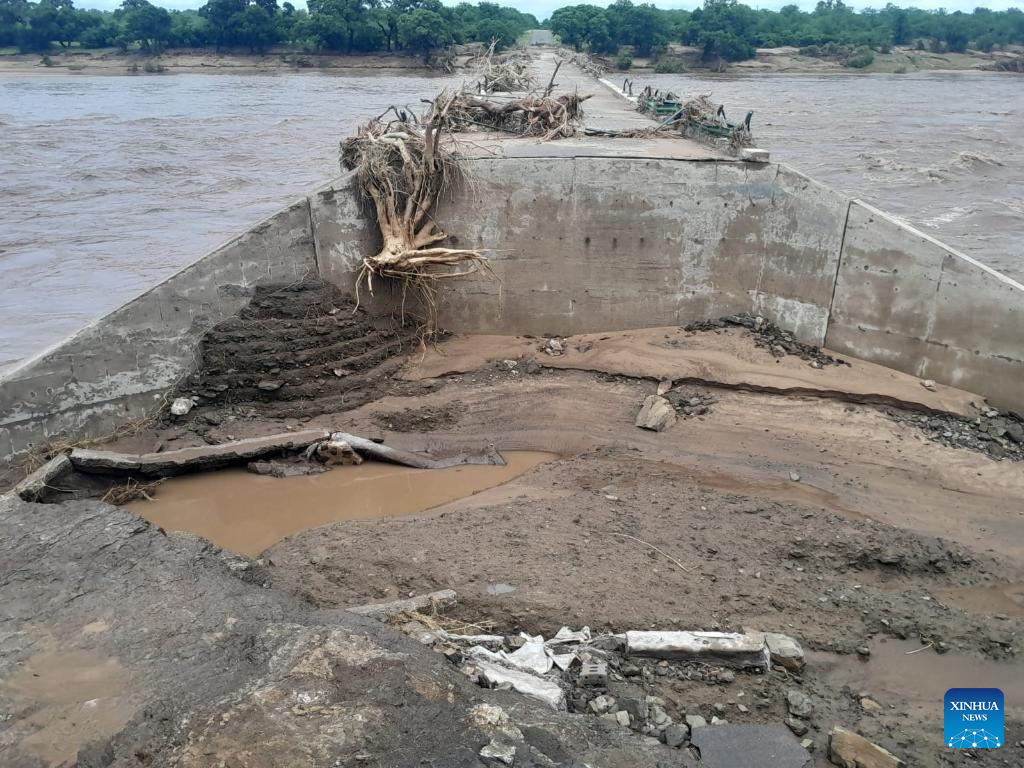
Limpopo and Mpumalanga were among the hardest hit. Roads collapsed, bridges vanished, and entire communities were cut off as rivers burst their banks. The government says several other provinces have also suffered damage.
The floods have forced the evacuation of hundreds of tourists and park workers from South Africa’s famed Kruger National Park, where camps were submerged and access roads destroyed. Authorities estimate the damage in Limpopo alone at around $240m, with many homes washed away completely.
But South Africa is only part of a much wider crisis unfolding across southern Africa.
From Mozambique to Zimbabwe, unusually intense rainfall has left more than 200 people dead since late December, according to humanitarian agencies. Thousands are sheltering in temporary camps. Farmland has been waterlogged. Health services are under strain.
Scientists say this was not just bad weather.
A year’s rain in days
A rapid analysis by World Weather Attribution, a global network of climate scientists, found that parts of southern Africa received more than a year’s worth of rain in just 10 days.
In some locations, up to 200mm of rain fell within days, overwhelming drainage systems and river basins. Researchers say extreme rainfall of this scale would normally be expected only once every 50 years.
But it is becoming more severe.
Observational data show that intense rainfall in southern Africa is now around 40% heavier than it was in pre-industrial times. Climate change, driven largely by fossil fuel emissions, is a key factor.
“We are seeing a clear shift towards more violent downpours,” said Dr Izidine Pinto, a climate scientist from Mozambique working at the Royal Netherlands Meteorological Institute.
“What would once have been a serious flood is now becoming a devastating event that communities are simply not equipped to handle.”
The rains were intensified by a weak La Niña event, which typically brings wetter conditions to the region. Scientists estimate that La Niña made the extreme rainfall about five times more likely, amplifying an already dangerous situation in a warmer atmosphere.
Infrastructure pushed beyond its limits
In Mozambique, nearly 5,000km of roads have been damaged, disrupting food supplies and access to medicines. Bridges have collapsed. Schools and health centres have been destroyed. Authorities say more than 75,000 people have been affected.
Zimbabwe has also reported widespread damage to transport infrastructure, while South Africa continues to search for missing residents, including children believed to have been swept away by floodwaters.
The scale of destruction has revived painful memories. More than 400 people died in floods in South Africa’s KwaZulu-Natal province in 2022, and over 100 were killed in the Eastern Cape the year after.
Yet scientists warn that what was once rare is becoming disturbingly familiar.
Climate crisis meets inequality
Africa contributes just 3 to 4% of global greenhouse gas emissions, according to the United Nations. Yet it remains one of the regions most exposed to climate extremes.
The latest floods have laid bare deep social vulnerabilities.
Across much of southern Africa, millions live in poorly planned settlements, often in flood-prone areas. In Mozambique, nearly 90% of homes are built from sun-dried earth, which dissolves after prolonged rain.
“When entire villages collapse, it’s not just a weather problem,” said Bernardino Nhantumbo of Mozambique’s National Institute of Meteorology. “It is a sign that our infrastructure is being tested by conditions it was never designed to survive.”
The World Health Organisation has warned of rising risks from waterborne and mosquito-borne diseases, as well as respiratory infections, following the floods. Disrupted clinics and damaged roads are making access to care even harder.
The modelling gap
Despite growing confidence that climate change is worsening extreme rainfall, scientists say Africa is being held back by a lack of locally developed climate models.
Most global climate models are built in Europe, the US and parts of Asia. They do not always capture African rainfall patterns accurately, limiting how precisely researchers can quantify climate impacts on the continent.
“That gap matters,” said Prof Friederike Otto of Imperial College London. “If Africa is on the frontline of climate impacts, it also needs to be at the centre of climate science.”
Researchers say better data, stronger early-warning systems and climate-resilient infrastructure are no longer optional. They are lifesaving necessities.
As southern Africa counts its dead and rebuilds shattered communities, the message from scientists is stark: without urgent climate action and serious investment in adaptation, disasters like this will keep coming — harder, faster and deadlier.