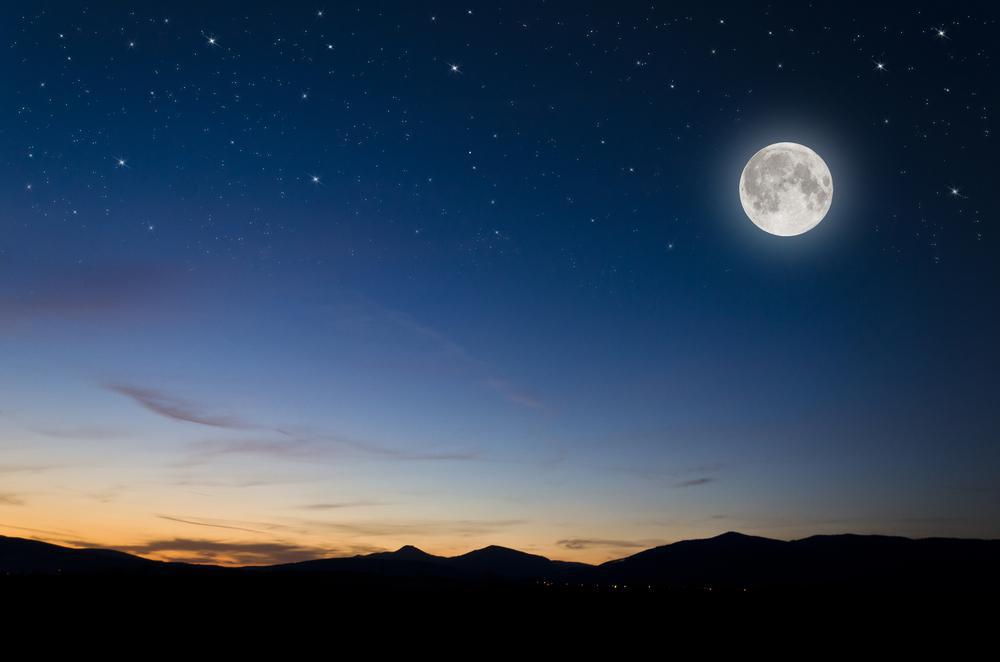
A popular inspirational saying, often repeated by motivational speakers and life coaches, claims that the darkest part of the night comes just before dawn.
The phrase is commonly used as a metaphor for hope, implying that difficult situations often seem worse just before they begin to improve.
The metaphor is often traced to English theologian and historian Thomas Fuller, who in 1650 wrote, “It is always darkest just before the day dawneth,” in A Pisgah-Sight of Palestine.
However, researchers note that the idea likely predates Fuller’s work and may have roots in older traditions, including Irish folklore, where it similarly conveys the belief that a person’s lowest point comes just before improvement begins.
But is the old myth scientifically accurate?
WHAT SCIENCE SAYS ABOUT NIGHT-TIME DARKNESS
From a scientific standpoint, physicist Guy Nir, PhD, says the night sky is not naturally darkest just before dawn. Instead, perceived darkness depends largely on the Moon’s phase and the presence of artificial lighting. In the absence of both moonlight and human-made light, starlight remains essentially constant throughout the night.
Nir also points to zodiacal light, a faint natural glow caused by sunlight reflecting off interplanetary dust, which can slightly brighten the sky after sunset and before sunrise, though this effect is barely noticeable in urban areas dominated by light pollution.
The Moon, he explains, has the strongest influence. After a new moon, it sets before dawn, making the early morning hours appear darker. Later in the lunar cycle, the Moon rises before sunrise, shifting the darkest part of the night to the hours after sunset rather than before dawn.
Nir adds that what is scientifically true is that temperatures are usually lowest just before sunrise, as the Earth’s surface cools gradually after losing the heat absorbed during the day.
 WHY THE MYTH PERSISTS
Stephen Ogundeji, a doctor of environmental systems and climate change and lecturer at the Federal University of Agriculture in Abeokuta, told CheckClimate Africa that “the darkest moment of the night happens when the Sun is at its lowest point below the horizon.”
“This moment, known as solar midnight, usually occurs around the middle of the night rather than near dawn. In Nigeria, because of its position close to the equator, this typically happens between about 2:00 and 3:00 a.m,” he said.
He further explained that once the Sun is more than 18 degrees below the horizon, its light no longer affects sky brightness, meaning darkness remains relatively constant for several hours instead of increasing toward morning.
Ogundeji added that “moon phase, cloud cover, atmospheric particles, and artificial lighting” all influence how people perceive darkness.
“A full moon brightens the night, while a new moon allows much darker conditions. Clouds can darken rural skies but brighten urban areas by reflecting artificial light, while dust, humidity, and aerosols scatter light and reduce sky clarity.”
According to him, urban light pollution creates persistent skyglow, leading people to judge how dark the night feels based on visibility rather than actual astronomical conditions.
Ogundeji said it is important to distinguish climate myths from scientific reality to ensure accurate understanding, prevent misconceptions, and help the public make informed decisions about weather, climate, and natural phenomena.
VERDICT
The claim that the darkest part of the night comes just before dawn is False. There is no climatological evidence to support the myth. The saying remains a motivational metaphor, not a scientific fact.