Nigeria’s federal government says tackling climate change, biodiversity loss and pollution will require new ways of financing solutions—and stronger involvement from the private sector.
The message came at the end of the 18th National Council on Environment meeting held in Katsina State, where government officials, environmental experts and development partners gathered to assess the country’s growing environmental risks.
The three-day meeting, organised by the Federal Ministry of Environment, focused on what officials described as the “triple planetary crisis” of climate change, biodiversity loss and pollution—three pressures increasingly shaping Nigeria’s economy, food systems and public health.
Speaking at the meeting, the Minister of Environment, Balarabe Lawal, warned that the impacts of climate change were no longer abstract.
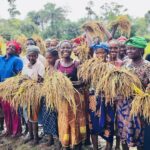
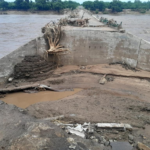
Rising temperatures, desertification, flooding, pollution and ecosystem degradation, he said, are already affecting livelihoods across the country, from farming communities to urban centres.
“These challenges are deeply interconnected,” Mr Lawal said, adding that responding to them would require coordinated, science-based action across sectors.
Turning plans into action
The minister pointed to several ongoing national initiatives, including Nigeria’s Energy Transition Plan, the Great Green Wall Programme and policies on plastic waste management, renewable energy and clean cooking.
But he stressed that public funding alone would not be enough.
To scale solutions, Mr Lawal called for innovative financing options such as public-private partnerships, green bonds, climate funds and carbon markets, while urging Nigerian businesses to play a more active role in climate action.
Environmental challenges like desertification and soil degradation, he added, could be transformed into opportunities for economic growth and job creation if approached strategically.
Katsina as a testing ground
The minister praised Katsina state for what he described as “strong leadership” on climate governance.
The state recently ranked second in the 2025 subnational climate governance performance assessment and has developed a green economy roadmap focused on renewable energy, dryland agriculture, eco-tourism and waste-to-energy solutions.
Plans are also underway to establish a green investment fund and implement a climate action plan covering 2025 to 2030.
Mr Lawal urged other states to follow similar paths, arguing that climate action at the subnational level would be critical to Nigeria’s wider environmental goals.
Earlier, Katsina state Governor Dikko Radda reaffirmed his administration’s commitment to environmental sustainability.
Represented by his deputy, Faruk Jobe, the governor said the state had prioritised early funding and logistical support to ensure the successful hosting of the council meeting.
He described the National Council on Environment as a key platform for aligning policies and strengthening collaboration across government levels.
As Nigeria faces intensifying climate risks, officials say the next test will be whether commitments made at such meetings translate into sustained investment and measurable action on the ground.