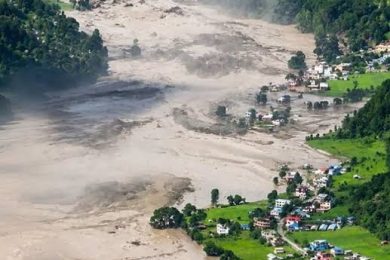
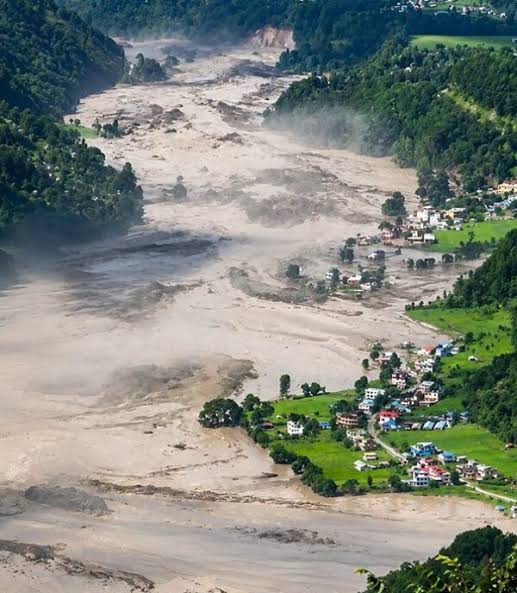
Nepal’s death toll from last week’s devastating glacial flood has risen to 955, while at least 4,247 people remain missing as rescue teams intensify efforts to reach hundreds of workers believed to be trapped inside hydropower tunnels
The disaster struck last Wednesday after a glacier collapse sent a massive surge of ice, rock, mud and debris through river valleys in the Rasuwa and Nuwakot districts, destroying homes, roads, bridges and critical infrastructure.
Nepal’s disaster authorities said 933 people associated with hydropower projects remain missing in the affected region.
Rescue teams are using excavators, controlled blasts and searchlights to clear mud and debris blocking tunnel entrances. Chinese and Indian specialists are supporting the operations, while Nepal has mobilised nearly 21,000 security personnel for the wider search and rescue effort.
The floods have also severely disrupted Nepal’s energy sector. About 700 megawatts of hydropower capacity, equivalent to roughly 10 percent of the country’s total generating capacity, has been knocked offline after several facilities were damaged in the disaster.
On the Chinese side, authorities in Tibet’s Gyirong County reported 16 deaths and 546 people missing, while rescue teams continue working around the heavily damaged border area.
The disaster has renewed concerns about the vulnerability of hydropower infrastructure and communities in the Himalayas to climate-related hazards. Scientists say faster glacial melting, unstable slopes and changing precipitation patterns can increase the risks of sudden floods and landslides in the region.